

Digital Marketing Strategies for Solicitors and Attorneys: Proven Methods That Drive New Client Instructions
Your law firm’s marketing strategy can make or break your practice growth.
The legal market in the UK is worth £47.5 billion, but 79% of law firms struggle with effective marketing. Most solicitors waste thousands on campaigns that don’t deliver real results.
This comprehensive guide shows you exactly how to attract more clients, increase revenue, and build a thriving legal practice. You’ll discover the marketing channels that deliver the highest return on investment, learn about compliance requirements, and get actionable strategies you can implement immediately.
Local SEO for Attorneys
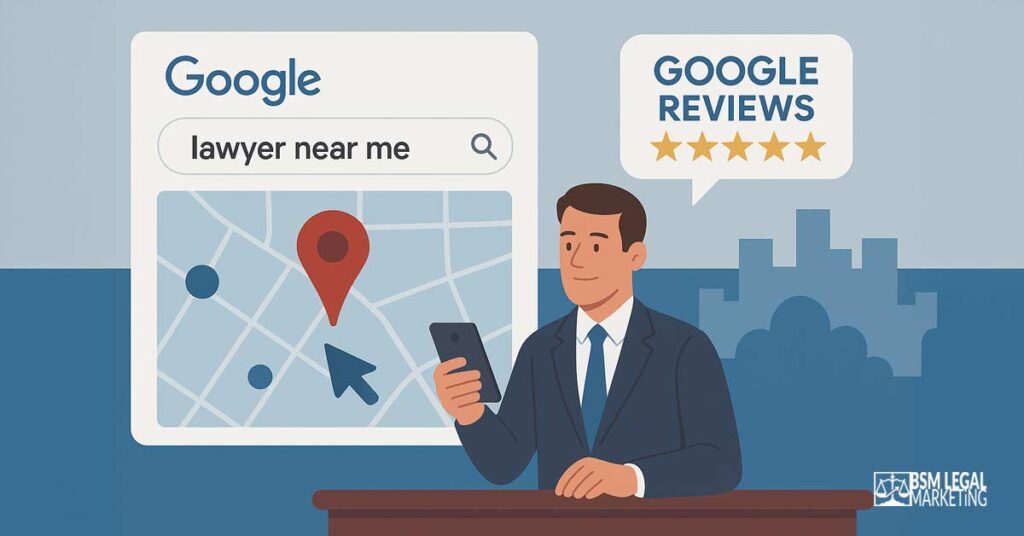
Local SEO is crucial for law firms serving specific geographical areas, with 46% of legal searches having local intent. Your Google Business Profile acts as your digital storefront, influencing whether potential clients choose to contact your firm. Consistent name, address, and phone number (NAP) information across all online directories significantly impacts local search rankings. Client reviews play a massive role in local SEO, with 88% of consumers reading reviews before choosing a lawyer. Local citations from legal directories and local business listings help establish your firm’s credibility and improve visibility in “near me” searches.
- Claim and optimise your Google Business Profile with accurate information and regular updates
- Encourage satisfied clients to leave Google reviews and respond professionally to all feedback
- Build local citations on legal directories like The Law Society and local chamber of commerce websites
Optimise your local SEO presence with this local SEO for lawyers guide.
Law Firm SEO
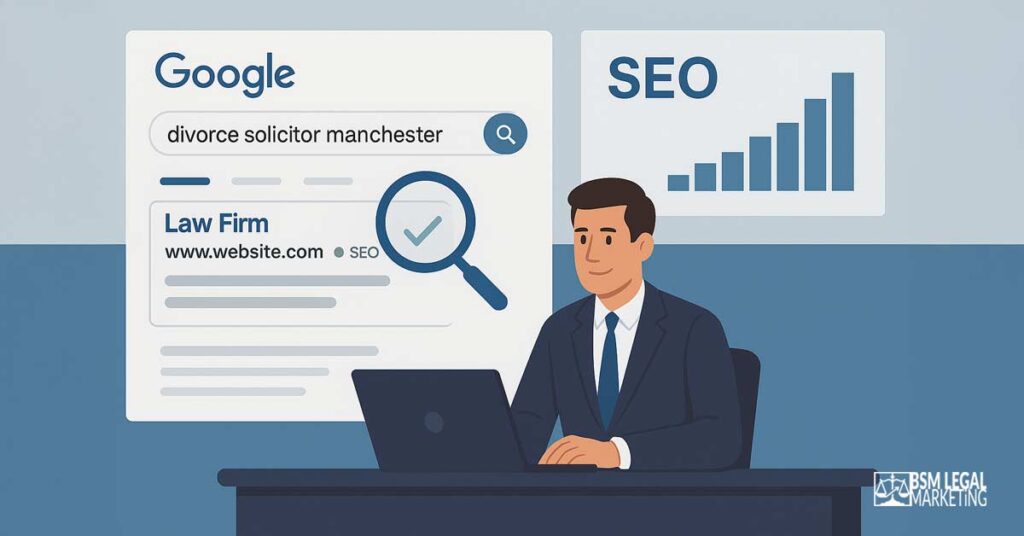
SEO delivers a massive 526% return on investment over three years, making it the highest-performing marketing channel for law firms. Most successful legal practices invest around £150,000 annually in SEO and see traffic increases of 21% year-on-year. Your potential clients start their search for legal services online 96% of the time, so ranking well on Google isn’t optional anymore. Legal content falls under Google’s “Your Money or Your Life” category, which means search engines apply stricter quality standards to legal websites. The key is creating content that demonstrates expertise, experience, authoritativeness, and trustworthiness (E-E-A-T) while targeting the right keywords for your practice areas.
- Focus on local search terms like “divorce solicitor Manchester” rather than generic terms
- Create detailed practice area pages that answer common legal questions clients ask
- Build high-quality backlinks from legal directories, local business associations, and industry publications
[Learn more about Law Firm SEO strategies →]
AI Marketing for Law Firms

Artificial intelligence transforms legal marketing by automating repetitive tasks, personalising client communications, and optimising campaigns in real-time for better ROI. AI tools analyse vast amounts of data to predict client behaviour, segment audiences precisely, and deliver the right message at the perfect moment. Law firms using AI marketing see 5-15% efficiency improvements whilst reducing wasted spend on campaigns that don’t generate qualified leads. The technology handles content creation, chatbot intake, predictive analytics, and campaign optimisation, freeing your team to focus on strategy and client relationships. Smart implementation of AI marketing for law firms requires human oversight to ensure SRA compliance and maintain the authentic voice that builds trust with potential clients.
- Use AI for audience segmentation and predictive targeting to identify prospects most likely to need your services
- Implement chatbots and conversational AI for 24/7 client intake whilst maintaining human review of all outputs
- Deploy AI analytics to track ROI across all marketing channels and eliminate wasted advertising spend
Discover how AI can transform your legal marketing →
PPC for Lawyers
Pay-per-click advertising delivers immediate visibility but costs vary dramatically by practice area, with personal injury averaging £159.17 per lead. Business law firms achieve the best cost-per-lead at £72.24, while bankruptcy law boasts exceptional conversion rates of 13.56%. Google Ads for legal services require careful keyword selection and compelling ad copy that complies with SRA regulations. Smart law firms use PPC to test new practice areas before investing in long-term SEO campaigns. The average legal firm spends £9.21 per click, but proper campaign optimisation can reduce costs while increasing qualified leads significantly.
- Set up conversion tracking to measure actual cases won, not just website enquiries
- Use negative keywords to exclude searches for “free legal advice” or “cheap lawyers”
- Create specific landing pages for each practice area to improve quality scores and conversion rates
[Discover effective PPC strategies for lawyers →]
Video Marketing for Lawyers

Video marketing increases website conversion rates by 86% and helps potential clients connect with your firm before they even visit your office. Legal explainer videos that break down complex processes build trust and position your firm as helpful rather than intimidating. Client testimonial videos provide powerful social proof, with video testimonials being 12 times more effective than written reviews. Video content performs exceptionally well on social media platforms, with lawyers who post videos receiving significantly more engagement than those who don’t. The key is creating valuable content that addresses client concerns rather than focusing solely on promotional material.
- Create short explainer videos for common legal processes in your practice areas
- Film client testimonials highlighting successful case outcomes and positive experiences
- Use video content across your website, social media, and email marketing campaigns
[Launch your legal video marketing strategy →]
Legal Content Marketing

Content marketing builds trust and positions your firm as the go-to expert in your field, with law firms that maintain blogs receiving 97% more inbound links. Quality legal content addresses real client concerns and questions, helping potential clients understand complex legal processes. The best performing legal content combines practical advice with clear calls-to-action that guide readers toward booking consultations. Content should be written at a Grade 7-8 reading level to reach the widest audience whilst maintaining professional credibility. Regular publishing schedules keep your firm visible in search results and demonstrate ongoing expertise to both clients and search engines.
- Answer the questions clients ask during initial consultations in your blog posts
- Create downloadable guides for complex legal processes like divorce or business formation
- Share client success stories (with permission) to build social proof and credibility
[Master legal content marketing techniques →]
Social Media for Law Firms

Social media marketing helps humanise your law firm and build relationships with potential clients, though only 23% of firms consider it effective currently. LinkedIn remains the most valuable platform for B2B legal services, while Facebook works well for consumer-facing practices like family law. The key is sharing valuable content rather than constantly promoting your services, as direct selling performs poorly on social platforms. Video content performs exceptionally well, with lawyers who post videos seeing 53% more engagement than those who don’t. Remember that all social media posts must comply with SRA advertising rules and maintain professional standards.
- Post legal tips and industry updates rather than constant promotional content
- Engage genuinely with comments and messages to build authentic relationships
- Use LinkedIn to connect with other professionals who might refer clients to your firm
[Explore social media strategies for law firms →]
Law Firm Branding

Strong branding differentiates your firm from competitors and commands higher fees, with well-branded firms charging 20-30% more than generic practices. Your brand encompasses everything from your logo and website design to how your staff answers the phone and the language in your marketing materials. Consistent branding across all touchpoints builds trust and recognition, making referrals more likely and marketing more effective. The most successful law firm brands focus on specific client outcomes rather than generic legal services, positioning themselves as specialists rather than generalists. Effective legal branding communicates competence, trustworthiness, and approachability whilst maintaining professional credibility.
- Develop a clear brand message that explains what makes your firm different
- Use consistent colours, fonts, and imagery across all marketing materials and touchpoints
- Train all staff to communicate your brand values in client interactions
[Build a powerful law firm brand →]
Email Marketing for Law Firms
Email marketing achieves exceptional conversion rates of 4.5% for law firms, making it one of the most cost-effective marketing channels available. Regular newsletters keep your firm top-of-mind with past clients, referral sources, and prospects who aren’t ready to engage legal services immediately. The key is providing valuable content rather than constant sales pitches, with legal updates and practical advice performing best. Segmented email lists allow you to send relevant content to different audiences, improving engagement rates and reducing unsubscribes. Automated email sequences can nurture leads over time, gradually building trust until prospects are ready to book consultations.
- Segment your email list by practice area interest and client type for more relevant content
- Include clear calls-to-action in every email, whether booking consultations or reading blog posts
- Set up automated welcome sequences for new subscribers to introduce your firm’s services
[Implement effective email marketing campaigns →]
Website Design for Lawyers

Your website serves as your firm’s digital headquarters and often provides the first impression potential clients have of your practice. Professional legal websites load in under 3 seconds, display perfectly on mobile devices, and clearly communicate what services you offer. The average visitor decides whether to stay on your site within 15 seconds, making compelling headlines and clear navigation essential. Modern legal websites focus on user experience rather than flashy design, with clear contact forms and prominent phone numbers driving more enquiries. Search engines favour fast-loading, mobile-friendly websites, making good design crucial for both user experience and search rankings.
- Place contact information prominently on every page, especially phone numbers for immediate contact
- Create separate pages for each practice area with detailed service descriptions and clear calls-to-action
- Include client testimonials and case results throughout the site to build credibility and trust
[Create a high-converting legal website →]
Reputation Management for Law Firms

Online reputation management is critical for law firms, as 88% of potential clients read reviews before choosing legal representation. Proactive reputation management involves monitoring what people say about your firm online and responding professionally to all feedback. A single negative review can cost your firm thousands in lost business, whilst positive reviews improve local search rankings and increase conversion rates. The best reputation management strategy focuses on prevention – delivering excellent client service that naturally generates positive reviews. When negative reviews do appear, responding professionally and addressing concerns publicly demonstrates your firm’s commitment to client satisfaction.
- Monitor Google reviews, legal directory feedback, and social media mentions regularly
- Respond to all reviews professionally, thanking positive reviewers and addressing negative concerns constructively
- Implement systems to encourage satisfied clients to leave reviews on Google and legal directories
[Protect and enhance your firm’s reputation →]
Legal Directories & Citations

Legal directory listings provide credibility and improve search engine visibility, with consistent NAP information across directories boosting local SEO performance. Premium listings on directories like The Law Society and Chambers & Partners can generate high-quality leads from clients specifically seeking legal representation. Directory citations act as digital references for your firm, helping search engines verify your business information and improve local search rankings. Some directories offer additional features like client review systems, practice area specialisation badges, and enhanced profiles that increase visibility. The key is choosing directories that your target clients actually use when searching for legal services.
- Claim and complete profiles on major legal directories like The Law Society and Legal 500
- Ensure consistent business information across all directory listings to improve local SEO
- Focus on directories specific to your practice areas rather than trying to be everywhere
[Maximise your legal directory presence →]
Blogging for Law Firms
Regular blogging drives 67% more leads than firms without blogs and significantly improves search engine rankings for legal keywords. The most effective legal blogs answer questions clients commonly ask during consultations, providing value whilst demonstrating expertise. Fresh content signals to search engines that your website is active and relevant, helping improve rankings for competitive legal terms. Successful legal blogging requires consistency, with firms publishing at least weekly seeing the best results in terms of traffic and lead generation. Blog content should be optimised for search engines whilst remaining readable and valuable for potential clients seeking legal information.
- Write about questions clients ask during initial consultations to create valuable, searchable content
- Publish consistently on a schedule that you can maintain long-term, even if it’s just once per week
- Include clear calls-to-action in every post directing readers to contact your firm for assistance
[Start a successful legal blog →]
Law Firm Marketing Automation
Marketing automation helps law firms nurture leads systematically, with automated email sequences improving conversion rates by up to 30%. Smart automation systems track potential client behaviour and deliver personalised content based on their interests and engagement level. The best legal marketing automation combines email sequences, social media scheduling, and lead scoring to create comprehensive nurturing campaigns. Automation frees up time for lawyers to focus on casework whilst ensuring consistent communication with prospects and referral sources. Properly configured automation systems can handle initial lead qualification, appointment scheduling, and follow-up communications without manual intervention.
- Set up automated email sequences for new leads that provide valuable legal information over time
- Use lead scoring to identify hot prospects who are ready for immediate contact
- Automate social media posting to maintain consistent online presence without daily manual effort
[Implement marketing automation systems →]
Conversion Rate Optimization for Lawyers
Conversion rate optimisation can double your website’s lead generation without increasing traffic, making it one of the most cost-effective growth strategies available. Small changes like improving contact form placement, adding client testimonials, or clarifying service descriptions can dramatically impact enquiry rates. The average legal website converts just 2-3% of visitors, but optimised sites achieve 5-8% conversion rates through strategic improvements. A/B testing different headlines, calls-to-action, and page layouts reveals what resonates best with your target clients. The key is making it as easy as possible for potential clients to contact your firm whilst building trust through social proof and clear communication.
- Test different contact form placements and designs to find what generates the most enquiries
- Add client testimonials and case results throughout your website to build trust and credibility
- Create clear, compelling calls-to-action that tell visitors exactly what to do next
[Optimise your website for better conversions →]
Marketing Compliance for Law Firms

SRA compliance is mandatory for all legal marketing activities, with violations potentially resulting in disciplinary action and reputational damage. The SRA prohibits unsolicited approaches to members of the public, including cold calling and targeted direct mail campaigns. All marketing materials must be accurate and not misleading, particularly regarding success rates, fees, and service capabilities. “No win, no fee” marketing requires careful explanation of what this actually means and potential client liabilities. Digital marketing presents particular compliance challenges around PPC targeting and social media advertising that many firms overlook.
- Review all marketing materials with SRA guidance to ensure compliance before publication
- Avoid cold calling or unsolicited approaches to potential clients, focusing on inbound marketing instead
- Clearly explain fee structures and potential costs in all promotional materials
[Ensure your marketing complies with SRA rules →]
Legal Referral Marketing
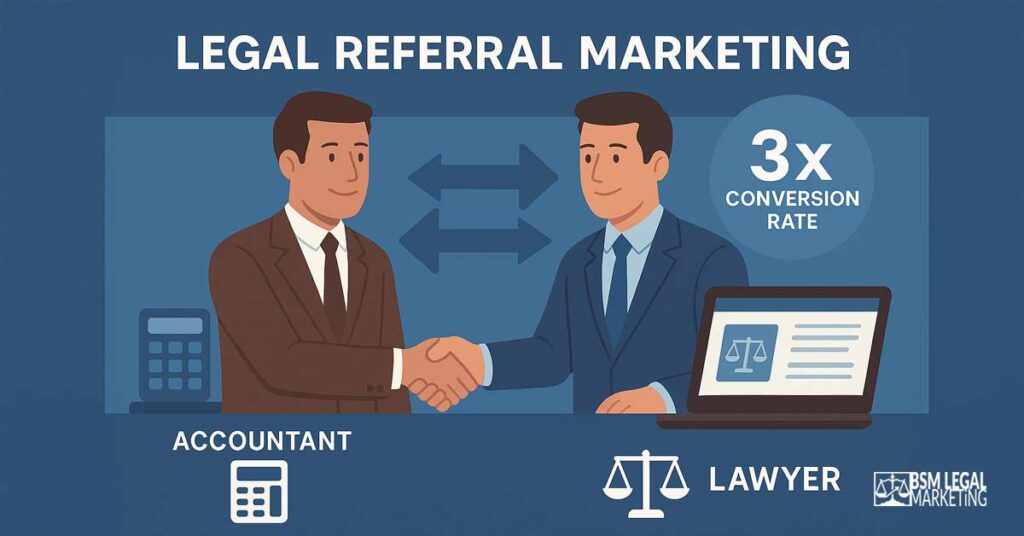
Referral marketing generates the highest quality leads for most law firms, with referred clients closing at rates 3-5 times higher than other sources. Building strong relationships with complementary professionals like accountants, estate agents, and other lawyers creates consistent referral streams. The most successful referral programs provide value to referral partners rather than simply asking for business. Regular communication with referral sources through newsletters, events, or personal outreach keeps your firm top-of-mind when opportunities arise. Reciprocal referral relationships work best when you can genuinely recommend other professionals’ services to your own clients.
- Identify professionals who serve your target clients but don’t compete with your services
- Provide valuable content and resources that referral partners can share with their own clients
- Track referral sources carefully and acknowledge successful referrals promptly and professionally
[Build a powerful referral marketing system →]
CRM & Lead Management for Law Firms
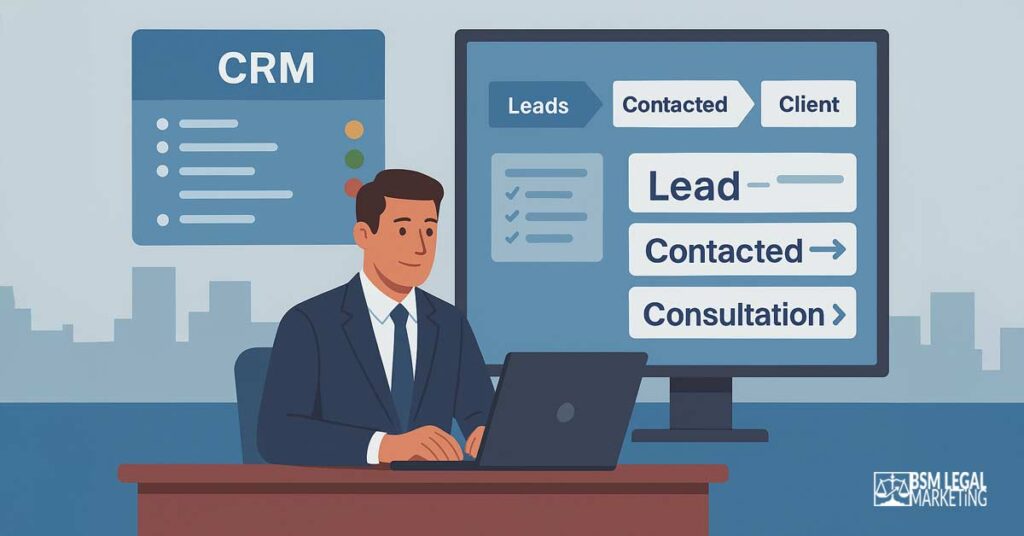
Customer relationship management systems prevent leads from falling through the cracks and improve conversion rates by up to 40%. Legal CRMs track every interaction with potential clients, ensuring proper follow-up and professional communication throughout the sales process. The average law firm loses 27% of leads due to poor follow-up, making systematic lead management crucial for growth. Modern legal CRMs integrate with marketing automation, email systems, and accounting software to provide comprehensive business management. Proper lead management includes lead scoring, automated follow-up sequences, and detailed reporting on conversion rates by source.
- Implement a CRM system that tracks all client interactions from initial enquiry to case completion
- Set up automated follow-up sequences for leads who don’t convert immediately
- Monitor conversion rates by lead source to focus marketing spend on the most effective channels
[Choose and implement the right CRM system →]
Google Business Profile for Lawyers
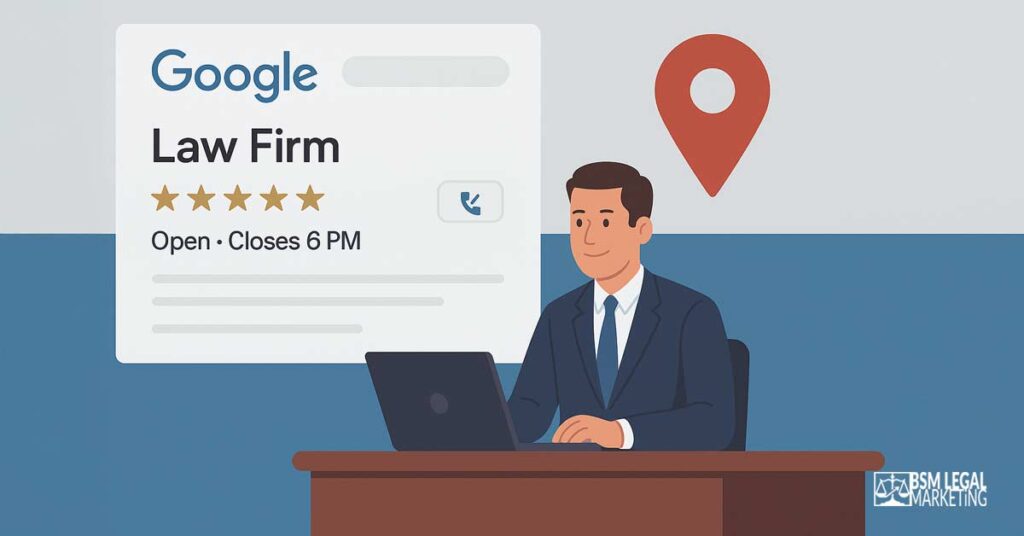
Your Google Business Profile acts as a free marketing tool that appears in local searches and Google Maps results for legal services. An optimised profile includes accurate business information, practice area descriptions, professional photos, and regular updates about your firm. Google Business Posts allow you to share news, events, and valuable content directly in search results, increasing visibility and engagement. Client reviews on your Google profile significantly influence local search rankings and potential client decisions. Regular profile updates and photo additions signal to Google that your business is active and relevant.
- Complete every section of your Google Business Profile with accurate, detailed information
- Regularly post updates about legal developments, firm news, and helpful tips for potential clients
- Encourage satisfied clients to leave detailed Google reviews mentioning specific services received
[Optimise your Google Business Profile →]
Print & Traditional Marketing

Traditional marketing still plays a role in legal marketing, particularly for firms serving older demographics or local communities. Professional networking events, print advertisements in legal publications, and sponsorship of local events can generate valuable referrals and brand recognition. The key is integrating traditional marketing with digital efforts rather than treating them as separate strategies. Print materials should drive traffic to your website and include clear calls-to-action for online engagement. Measuring ROI from traditional marketing requires careful tracking through dedicated phone numbers, landing pages, or promotional codes.
- Choose traditional marketing channels that align with where your target clients spend their time
- Include website URLs and clear calls-to-action in all print and traditional advertising materials
- Track results through dedicated phone numbers or promotional codes to measure effectiveness
[Integrate traditional marketing with digital strategies →]
Legal Marketing Analytics

Marketing analytics provide the data needed to make informed decisions about budget allocation and strategy optimisation. The most important metrics for law firms include cost per lead, lead-to-client conversion rates, client lifetime value, and return on investment by marketing channel. Google Analytics 4 offers powerful insights into website visitor behaviour, helping identify which content attracts potential clients and where visitors drop off. Legal-specific analytics should track the full client journey from initial search to case completion and final payment. Regular reporting and analysis help identify trends, optimise underperforming campaigns, and scale successful marketing efforts.
- Set up comprehensive tracking for all marketing channels to measure true ROI
- Monitor lead quality metrics, not just lead quantity, to focus on campaigns that generate better clients
- Create monthly reports that track key performance indicators and identify areas for improvement
[Master legal marketing analytics and reporting →]
Frequently Asked Questions
How much should law firms spend on marketing?
Law firms typically spend 2-12% of gross revenue on marketing, with the percentage varying by practice area and growth goals. Small firms and those in competitive markets like personal injury often invest 10-15% of revenue in marketing activities. Business law firms usually spend 2-5% due to higher case values and referral-based business models. SEO delivers the best long-term ROI at 526% over three years, whilst PPC provides immediate visibility but requires ongoing investment.
What marketing channels work best for law firms?
SEO consistently delivers the highest ROI for law firms, followed by referral marketing and email marketing. Content marketing through blogging drives 67% more leads than firms without blogs. Local SEO is crucial for firms serving specific geographical areas, with 46% of legal searches having local intent. The most successful firms use integrated marketing approaches combining digital and traditional channels.
How do SRA regulations affect legal marketing?
The SRA prohibits unsolicited approaches to members of the public, including cold calling and targeted direct mail. All marketing materials must be accurate and not misleading regarding success rates, fees, and capabilities. Social media marketing must maintain professional standards whilst complying with advertising rules. Digital marketing activities like PPC and social media targeting require careful consideration of compliance requirements.
How long does it take to see results from legal marketing?
SEO typically requires 6-12 months to show significant results, with average break-even periods of 14 months. PPC advertising can generate leads immediately but requires ongoing optimisation for best results. Content marketing and blogging build momentum over time, with consistent publishing showing results after 3-6 months. Email marketing can generate immediate results but works best when combined with longer-term relationship building.
Should small law firms hire marketing agencies or do marketing in-house?
Small firms often benefit from agency expertise, particularly for technical areas like SEO and PPC management. Agencies provide access to specialised tools and experience across multiple clients, often delivering better results than in-house efforts. However, content creation and relationship building often work better with in-house involvement. The best approach often combines agency expertise for technical execution with in-house involvement for content and client relationships.
What’s the most important element of a law firm website?
Clear contact information prominently displayed on every page is crucial, with phone numbers being particularly important for immediate contact. Professional design that loads quickly on mobile devices significantly impacts visitor behaviour and search rankings. Practice area pages with detailed service descriptions and clear calls-to-action help potential clients understand your capabilities. Client testimonials and case results throughout the site build credibility and trust with visitors.
How important are online reviews for law firms?
Online reviews are extremely important, with 88% of potential clients reading reviews before choosing legal representation. Positive reviews improve local search rankings and increase website conversion rates significantly. A single negative review can cost thousands in lost business if not handled properly. The best approach focuses on delivering excellent service that naturally generates positive reviews rather than constantly asking clients for feedback.
What compliance issues should law firms watch for in digital marketing?
Unsolicited digital approaches through email, social media, or targeted advertising may violate SRA rules if not properly implemented. “No win, no fee” marketing requires clear explanation of actual meaning and potential client liabilities. Client confidentiality must be protected in all marketing materials, including testimonials and case studies. All marketing claims about success rates, experience, or capabilities must be accurate and substantiated.
How can law firms measure marketing ROI effectively?
Track leads from each marketing channel using unique phone numbers, landing pages, or promotional codes. Monitor the full client journey from initial enquiry to case completion and payment collection. Calculate true cost per client acquisition including all marketing costs, not just advertising spend. Use legal practice management software to track which marketing sources generate the most valuable clients over time.
What’s the difference between legal marketing for different practice areas?
Personal injury marketing focuses heavily on PPC and local SEO due to high competition and immediate client needs. Business law marketing relies more on content marketing and relationship building due to longer sales cycles. Family law marketing benefits from local SEO and emotional connection through content marketing. Criminal law marketing must be particularly careful about compliance and professional standards whilst addressing urgent client needs.