
How Call Tracking Software Transforms Legal Marketing Performance and Client Acquisition
Tracking Calls from SEO for Law Firms
Compliant. Measurable. Human verified.
General stack. Install DNI, standardise UTMs, and fire a GA4 event on tel: clicks. Reconcile completed calls with sessions monthly and report instructions, not just calls. Document that GBP call history is removed.
Sole office. One tracking pool for “organic.” Tag key SEO landing pages. Compare GA4 phone-clicks to completed calls and first-time callers. Publish a simple monthly ROI table: calls → consultations → instructions.
Multi-location. Separate pools per office and per GBP. Roll up by location: calls, answer rate, missed calls, and cost-per-instruction. Add geo-grid reporting alongside call logs to prove visibility and outcomes.
Advanced. Pass UTMs to the call platform, stitch to GA4 sessions, and build Looker Studio views. Size number pools to peak concurrent users. Use recordings/transcripts (where lawful) to evidence qualified leads.
Important. Track calls, yes, but avoid unsolicited approaches or misleading claims. Keep records of sources and third-party introducers. Maintain an auditable change log for marketing and reporting.
This block aligns with SRA publicity and unsolicited-approach rules.
You’re wasting money on SEO if you can’t track which keywords bring in phone calls.
Most law firms spend thousands each month on local SEO, but they have no idea which searches actually generate consultations.
And here’s what makes this worse: the calls you’re missing could be your highest-value cases.
Most law firms know their phone rings. They know people find them through Google. But they can’t connect the dots between specific keywords and actual client calls. This costs money.
Call tracking technology shows you exactly which SEO for lawyers efforts are driving phone calls. You see the keyword someone typed, which page they visited, and you can listen to the call recording.
Law firms using call tracking identify their most valuable digital marketing channels. They stop wasting budget on keywords that don’t convert. They invest more in what works.
Discover how call tracking reveals your entire client acquisition process. Which practice areas generate quality calls? What time of day do your best leads phone? How calls are being handled by your intake team?
Understanding Call Tracking for Law Firms
What is Call Tracking?
Call tracking software shows you where your phone calls come from. When someone searches for “personal injury lawyer near me“, finds your website, and calls you, the software records that journey. You see the exact keyword, the landing page, and how long they stayed.
The caller’s experience doesn’t change. They see a phone number, ring it, and your phone rings. But the system captures everything behind the scenes.
The technology uses unique tracking numbers. These are phone numbers that forward to your main law firm line. Each number contains data about where the caller found you. [10]
This matters because phone calls generated through SEO represent your highest-intent leads. Someone who picks up the phone is far more likely to become a client than someone who just fills out a contact form. Call tracking can help law practices understand their return on investment. [3]
Core Technologies Explained
Two main technologies power call tracking: Dynamic Number Insertion (DNI) and static tracking numbers.
Dynamic Number Insertion (DNI)
DNI swaps phone numbers on your website based on how visitors arrive. Someone from Google organic search sees one number. Someone from a Google Ad sees a different number. A visitor from Facebook sees another. [24]
This happens instantly. The technology reads the visitor’s source (like their referrer URL or UTM parameters) and displays the appropriate tracking number. [2]
The benefits are clear. You can track unlimited online marketing campaigns with precision. You know exactly which campaigns drive valuable calls. You can calculate the cost per call for each channel and hold your SEO agency accountable.
But DNI requires some technical SEO setup. You need to install JavaScript code on your law firm’s website. Your site needs to load quickly enough that the number swap doesn’t create a poor user experience.
Static Tracking Numbers
Static numbers don’t change. You assign one tracking number to a specific marketing channel and leave it there.
For example, you might use one number on your Google Business Profile. A different number in your Yellow Pages ad. Another number on a billboard.
Static numbers work well for offline marketing. They’re also useful for tracking broad channels rather than specific keywords. But they have limitations. You can’t track individual keywords or landing pages. You only see channel-level data. [24]
Multi-Channel Tracking
Modern call tracking platforms monitor calls to specific marketing channels. Organic search. Paid ads. Social media. Email campaigns. Direct traffic. [16]
The system creates a complete picture of your marketing analytics performance. You can compare which channels deliver the highest-quality calls. You can see which legal services generate the most calls from each source.
This matters for law firms with multiple service offerings. Your family law local SEO efforts might drive different call patterns than your criminal defence online marketing. [2]
Real-Time Tracking and Reporting
Call tracking platforms provide instant data. A potential client calls your firm. Within seconds, the platform logs the call source, duration, and caller information. [16]
You can set up real-time alerts. Get notified when calls exceed a certain length (usually a sign of quality leads). Receive warnings when call volume drops suddenly. Track missed calls immediately so you can follow up. [10]
How Call Tracking Integrates with Law Firm Operations
Website Integration
Installing call tracking requires adding code to your law firm website. Most platforms provide a simple JavaScript snippet. You paste it into your website’s header, similar to how you’d install Google Analytics.
The code needs to work with your existing setup. If you’re using WordPress, most call tracking platforms offer plugins. For custom websites, your developer can implement the code directly.
One thing to watch: page speed. The tracking code shouldn’t slow down your website. Google cares about page speed for schema markup and rankings. Choose a platform with fast-loading code.
CRM System Connection
Learn how call tracking with CRM becomes more powerful when connected to your Customer Relationship Management system. The integration automatically logs every call in your CRM. You see the full client journey from first search to signed retainer. [2]
Popular legal CRM platforms like Clio, Lawmatics, and PracticePanther all support call tracking integrations. The setup usually involves API connections that sync data between platforms. [16]
This integration helps your intake team work more efficiently. When a call comes in, they can see the caller’s history immediately. Which pages did they visit? What legal services were they researching? Have they called before?
Phone System Compatibility
Call tracking works with virtually any phone system. Traditional landlines. VoIP systems. Mobile phones. The tracking number simply forwards calls to whatever number you specify.
You can set up sophisticated call routing rules. Route family law calls to one attorney. Send personal injury leads to another. Direct after-hours calls to your answering service. [16]
Call Routing and Forwarding
Smart call routing improves your client experience. The technology can route calls to specific attorneys based on the caller’s location, the time of day, or which SEO campaign they responded to.
For example, you might route local SEO calls from Manchester to your Manchester office. Calls from London go to your London office. This works especially well for law firms with multiple locations and helps you grow your law firm through better service. [10]
You can also implement time-based routing. Business hours calls often go to your reception desk. Evening and weekend calls forward to your mobile or answering service. [24]
The Critical Link Between SEO and Phone Calls
Why SEO Generates Phone Calls
SEO doesn’t just drive website traffic. It drives conversations. When someone searches for legal services, finds your website, and picks up the phone, that’s SEO working exactly as it should. [1]
The buyer journey for legal services follows a predictable pattern.
- Someone experiences a legal problem.
- They search Google.
- They read multiple websites.
- They compare options.
- Then they call the law firms that seem most credible and capable.
Phone calls represent high-intent behaviour. Someone who clicks your website might be casually researching. Someone who calls you is ready to talk about hiring an attorney. That’s the difference between a website visitor and a qualified prospect.
For most legal practice areas, phone calls convert to clients far better than contact forms. A personal injury prospect wants to explain their situation immediately. A family law client needs reassurance before sharing personal details. A criminal defence client has urgent questions. These prospects pick up the phone.
This is why tracking SEO performance solely through Google Analytics misses the complete picture. You see pageviews and form submissions. But you don’t see the phone calls generated by your SEO efforts unless you implement call tracking.
The Missing Attribution Gap
Traditional analytics miss phone call data entirely. Google Analytics shows you which keywords drive traffic, but even now, it does not show you all the keywords that drive traffic to your website. It shows which pages get viewed. It tracks form submissions. But when someone picks up their phone and dials your number? That conversion is invisible. [1]
This creates a massive blind spot in ROI measurement. Your SEO might be generating dozens of qualified phone calls each month. But if you’re only counting web form submissions, you’re drastically underestimating SEO effectiveness.
The problem compounds when you compare marketing channels. You might see that Google Ads generates 20 form submissions per month while SEO generates 5. Based on that data, you’d conclude paid ads outperform organic search. But what if SEO actually drives 30 phone calls while paid ads drive 10? Without call tracking, you make budget decisions based on incomplete data. [14]
Law firms waste thousands of pounds (or dollars) on marketing channels that appear successful in Analytics but don’t generate actual clients. Conversely, they underinvest in channels that drive quality phone calls because those conversions aren’t being tracked.
Call Tracking as the Missing Analytics Piece
Call tracking bridges the gap between SEO for lawyers efforts and actual client acquisition. It connects the dots that standard analytics can’t see. [1]
When you implement call tracking, phone calls become trackable conversions. You see exactly which SEO keywords drove each call. Which landing page the caller visited. How long they stayed on your site before calling. Whether they visited multiple times before converting.
This transforms how you measure marketing effectiveness. Instead of focusing on impressions, clicks, and pageviews, you focus on business outcomes. How many consultation calls did this keyword generate? How many of those calls converted to clients? What’s the true cost per client acquisition from SEO?
With complete attribution data, you make better budget decisions. You identify which SEO campaigns actually drive revenue. You stop wasting money on keywords that look good in Analytics but don’t generate qualified calls. You invest more in what works. [14]
Call tracking also reveals patterns in caller behaviour. What time of day do your best prospects call? Which practice areas generate the most phone inquiries? How does call volume correlate with SEO rankings? These insights help you optimise not just your marketing, but your entire client acquisition process. [25]
How to Track Calls from SEO Campaigns for You Lawyers

Setting Up Call Tracking for Organic Search Results
Tracking calls from organic search requires installing tracking code on your law firm’s website. The process is straightforward but needs proper setup to capture accurate data. [4]
Start by choosing a call tracking platform. Most platforms provide JavaScript code that you add to your website header. This code enables dynamic number insertion, showing different tracking numbers to visitors from different sources.
Once installed, create tracking numbers for your organic search traffic. The system automatically displays these numbers when someone arrives from Google organic results. When they call, the platform captures their journey:
- which keyword they searched,
- which page they landed on,
- how long they browsed. [8]
Configure call routing so these calls reach the right people. You might route personal injury calls to one attorney, family law calls to another. The technology can route based on which landing page triggered the call. [4]
Test thoroughly before going live.
- Search for your target keywords on Google.
- Click through to your website.
- Verify that tracking numbers display correctly.
- Make test calls to confirm proper routing and recording. [5]
Tracking Calls from Paid Search and Google Ads
Paid search tracking requires a slightly different approach. You assign separate tracking numbers to each ad campaign or even each keyword. This lets you measure exactly which Google Ads generate phone calls.
| Tracking Method | Use Case | Attribution Level |
|---|---|---|
| Campaign-level tracking | Track performance by ad campaign | Shows which campaigns drive calls |
| Ad group-level tracking | Track performance by ad group | Shows which ad groups generate calls |
| Keyword-level tracking | Track performance by specific keyword | Shows exactly which keywords drive calls |
Keyword-level tracking provides the most granular data. You see that “car accident lawyer Manchester” generated 8 calls this month while “personal injury attorney Manchester” generated 3. This tells you where to focus your ad spend.
Calculate cost per call for each keyword. If you spent £200 on “DUI lawyer” and got 4 calls, your cost per call is £50. Compare this across keywords to identify the most efficient terms. [5]
Most call tracking platforms integrate directly with Google Ads. They automatically import campaign data, showing you call conversions alongside click conversions. This gives you complete visibility into paid search ROI. [8]
Tracking Calls from Local SEO and Google My Business
Local SEO generates significant call volume for law firms. Someone searches “solicitor near me” on their phone, finds your Google Business Profile, and calls immediately. You need to track these calls. [4]
Use a static tracking number for your Google Business Profile (GBP). Replace your main number with a dedicated tracking number that forwards to your office. Every call to this number gets logged as coming from your GMB listing.
Important consideration: use the same tracking number consistently. Don’t change it frequently, as number consistency affects local search rankings. The tracking number becomes part of your citation building strategy.
Track calls from Google Maps searches separately if possible. Some advanced platforms can distinguish between calls from Maps results versus calls from regular GBP views. This helps you understand which features drive the most calls.
Don’t forget directory listings. Use separate tracking numbers for major directories like Avvo, FindLaw, or Justia. This lets you measure which directories actually generate calls versus which are wasting your money.
Multi-Channel Call Tracking Implementation
The real power comes from tracking across all channels simultaneously. You see the complete picture of which marketing efforts drive phone calls.
| Marketing Channel | Tracking Method | Key Metrics |
|---|---|---|
| Organic Search | Dynamic number insertion | Calls by keyword, landing page |
| Google Ads | Campaign/keyword-level numbers | Cost per call, conversion rate |
| Google Business Profile | Static GMB tracking number | Local search call volume |
| Directory Listings | Unique number per directory | ROI by directory |
| Social Media | Social-specific tracking number | Social engagement to calls |
| Email Marketing | Email campaign tracking number | Email click-to-call rate |
This multi-channel view reveals which channels work best for your specific practice. Personal injury firms might find Google Ads drives the most calls. Family law practices might see organic search performing better. Estate planning attorneys might get significant calls from email marketing. [4]
Real-time dashboards show call volume by channel as it happens. You can identify problems immediately. If calls from organic search suddenly drop, you investigate potential ranking changes or technical issues.
The data also helps you understand the customer journey. Many clients don’t convert on first contact. They might find you through organic search, leave without calling, then return via Google Ads and finally phone. Multi-channel tracking captures these complex journeys. [8]
Measuring ROI from SEO-Generated Calls

Key Metrics for Law Firm Call Tracking
Tracking calls means nothing without measuring the right metrics. You need to know which data points actually matter for your law practice.
| Metric | What It Shows | Target Benchmark | Action If Below Target |
|---|---|---|---|
| Call volume by source | Which channels drive calls | Varies by practice area | Investigate underperforming channels |
| Call volume by keyword | Which search terms generate calls | Track top 20 keywords | Optimise for high-converting keywords |
| Call duration | Lead quality indicator | 5+ minutes for serious inquiries | Improve intake questions, train staff |
| Call-to-consultation rate | How many calls book meetings | 40-60% for qualified calls | Review call recordings, improve pitch |
| Cost per call | Marketing efficiency | £25-75 depending on practice | Pause underperforming channels |
| First-time vs repeat callers | New vs existing client inquiries | 70%+ should be new callers | Improve client communication |
Call volume by source reveals which marketing channels actually work. You might discover that organic search drives twice as many calls as Google Ads, even though Ads generate more website traffic. This changes budget allocation decisions.
Call duration indicates conversation quality. A two-minute call is usually someone asking about fees or availability. An eight-minute call typically involves someone explaining their legal situation in detail. Longer calls often convert better. [18]
Track these metrics by practice area separately. Your personal injury SEO campaign might drive 40 calls per month with a £35 cost per call. Your family law campaign might generate 15 calls at £60 each. Different practice areas have different economics.
Understanding Call Quality Beyond Quantity
Not all calls are equal. Five quality calls from serious prospects beat 20 calls from tire-kickers. You need to measure call quality, not just volume. [22]
Tag each call in your system based on quality. Create categories like:
- “consultation booked“,
- “qualified but not ready“,
- “not qualified“,
- “existing client“,
- or “wrong number“.
This lets you calculate conversion rates accurately. [6]
Listen to call recordings regularly.
You’ll hear patterns. Quality calls often include specific questions about your experience, detailed explanations of legal problems, and urgency in the caller’s voice. Low-quality calls involve price shopping, vague inquiries, or immediate pushback on fees. [18]
Which keywords generate the highest-value calls?
This is critical data. The keyword “cheap divorce lawyer” might drive high call volume but low-quality leads. The keyword “complex child custody modification” might generate fewer calls but higher-value cases. Track call quality by keyword to optimise targeting.
Caller intent varies dramatically by search term.
Someone searching “solicitor near me” has immediate need but might not be qualified. Someone searching “employment discrimination lawyer workplace retaliation” shows specific intent and likely higher qualification.
Connecting Calls to Actual Client Acquisition
The ultimate metric is how many callers become paying clients. This requires tracking beyond the initial call.
Integrate your call tracking with your CRM.
When someone calls, the system creates a lead record. When that lead books a consultation, mark it in the CRM. When they sign a retainer, update the record. Now you can trace the complete journey from keyword to client.
Calculate client lifetime value by acquisition source.
Clients acquired through organic search might be worth more than clients from paid ads. They might stay longer, refer more colleagues, or have higher-value cases. This data justifies investing more in SEO even if the upfront cost per call seems higher.
Track time-to-conversion by channel.
How long does it take for an SEO-generated call to become a client? Personal injury prospects might sign immediately. Estate planning clients might take months to decide. Understanding these timelines helps you forecast revenue and plan cash flow.
Attribution gets complex when clients touch multiple channels.
Someone might find you through organic search, leave without calling, see your Google Ad later, and then call. Which channel gets credit? Most call tracking platforms offer attribution models:
- first touch,
- last touch,
- or multi-touch.
Choose the model that makes sense for your firm.
ROI Calculation and Justification
Now you can calculate true ROI from SEO. Here’s the formula that actually matters:
| ROI Component | How to Calculate | Example |
|---|---|---|
| Total SEO Investment | Monthly SEO cost × 12 months | £2,000 × 12 = £24,000 |
| Calls Generated | Track all calls from organic search | 480 calls per year |
| Cost Per Call | Total investment ÷ calls generated | £24,000 ÷ 480 = £50 |
| Conversion Rate | Clients signed ÷ total calls | 96 clients ÷ 480 calls = 20% |
| Cost Per Client | Total investment ÷ clients acquired | £24,000 ÷ 96 = £250 |
| Average Client Value | Total revenue ÷ number of clients | £288,000 ÷ 96 = £3,000 |
| Total ROI | (Revenue – Investment) ÷ Investment × 100 | (£288,000 – £24,000) ÷ £24,000 = 1,100% |
This calculation shows the complete picture. A £24,000 annual SEO investment generating £288,000 in revenue represents 1,100% ROI. Without call tracking, you’d miss most of this revenue attribution.
Compare ROI across marketing channels using the same methodology. You might find SEO delivers 1,100% ROI while Google Ads delivers 400% ROI. Both are profitable, but this data helps you prioritise budget allocation.
Use this data to justify marketing spend to firm partners. Show them exact revenue generated per pound spent. Demonstrate which channels deliver the best return. Prove that marketing is an investment, not an expense.
Track ROI trends over time. SEO typically improves over months and years as your rankings strengthen. Month 1 might show 200% ROI. By month 12, you might see 1,500% ROI. This long-term view justifies sustained investment.
Benefits of Call Tracking for Law Firms
ROI Measurement and Marketing Attribution
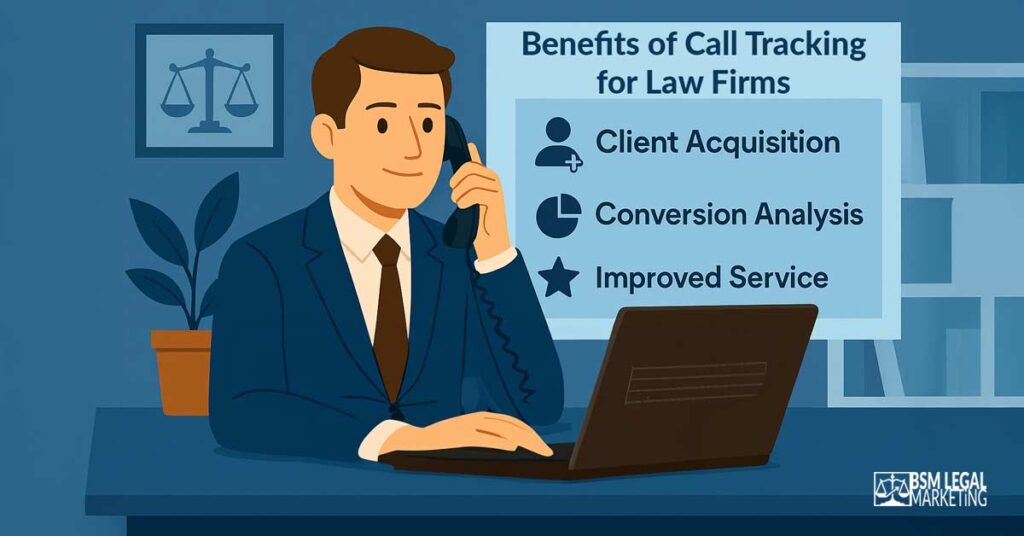
The biggest benefit call tracking gives law firms is knowing exactly where clients come from. [1]
Without call tracking, you’re guessing. You might know that organic search drives website traffic. But you can’t connect specific keywords to actual client conversations or see which marketing strategies actually work.
Call tracking changes this completely. You see the exact search query someone typed before calling. You know which page they visited on your law firm’s website. How long they stayed. Whether they called immediately or returned later.
This data lets you make informed decisions about your marketing budget and choose your firm over competitors. If “car accident lawyer Manchester” generates five quality calls per month, you know to invest more in ranking for that keyword. If “personal injury solicitor” drives traffic but few calls, you can adjust.
You eliminate guesswork from budget allocation. Instead of spreading money across multiple channels hoping something works, you invest heavily in what actually generates clients. [15]
Lead Generation and Client Acquisition Optimization
Call tracking reveals which marketing efforts actually help law firms generate qualified leads. You see which keywords, which content, and which campaigns drive real conversations. [3]
With this data, you optimise your marketing mix. You might discover that local landing pages generate three times more calls than your homepage. Or that blog posts about specific legal issues drive more qualified calls than practice area pages.
You reduce cost per client acquisition by identifying inefficiencies. Maybe you’re spending £500 per month on a directory that generates zero calls. Or investing in keywords that drive traffic but don’t convert. Cut these expenses and reallocate to what works.
Scale successful campaigns with confidence. Once you identify which SEO campaign drives the best ROI, you can expand similar efforts. Create more content on topics that generate calls. Target additional keywords with similar intent. Invest more budget in proven channels.
Operational Efficiency and Intake Improvement
Call tracking improves how your team handles incoming calls. When a potential client phones, your receptionist can see their background information immediately. Law firms can gain valuable insights from this data combined with SEO tracking. [11]
They know which legal services the caller researched. Which page they visited. Whether they’re calling for the first time or following up. This context helps your team provide better service.
Train intake staff based on actual call patterns. Listen to recordings of successful conversations. Identify what works. Create scripts or talking points. Improve your team’s ability to convert callers into consultations.
Reduce missed call opportunities. The system alerts you immediately when calls go to voicemail. You can return these calls within minutes instead of hours. Many firms lose clients simply because competitors answer faster. [15]
Implement quality assurance for client communication. Regularly review random call recordings. Assess how your team handles inquiries. Identify areas for improvement. Ensure consistent, professional service.
Competitive Advantage
Most law firms don’t use call tracking properly. This gives expert law firm marketing agencies and firms who implement it correctly a significant edge.
While competitors guess about their marketing effectiveness, you have precise legal marketing analytics. You know which keywords convert. Which local search terms drive calls. Which times of day generate the best leads. An expert in law firm marketing can accelerate now law firm marketing results using this data.
This information compounds over time. After six months, you have detailed patterns. After a year, you can predict seasonal trends. After two years, you understand your market better than anyone and can identify which phone numbers to specific marketing channels perform best.
Discover market demand through call analytics. If you’re getting unexpected call volume for a specific legal issue, that reveals market opportunity. You can create content, services, and marketing around that demand.
Make faster, data-driven business decisions. When competitors rely on intuition, you use data. This speed and accuracy give you a decisive advantage in capturing market share.
Compliance, Ethics, and Legal Considerations when using Call Tracking

Call Recording Laws and Consent Requirements
Call recording falls under wiretapping laws that vary by jurisdiction. You must understand these requirements before implementing call tracking with recording features.
UK law requires that at least one party to a phone conversation consents to recording. Since your law firm is a party to the call, you can record without additional permission. However, best practice is to notify callers with a message like “This call may be recorded for quality and training purposes.” [26]
Some US states require two-party consent, meaning both you and the caller must agree to recording. States with two-party consent laws include California, Connecticut, Florida, Illinois, Maryland, Massachusetts, Montana, New Hampshire, Pennsylvania, and Washington. [27]
Most call tracking platforms include automatic notification features. The system plays a recorded message before connecting the call: “This call may be recorded…” This satisfies legal requirements in most jurisdictions.
Attorney-Client Privilege Considerations
Once someone becomes your client, call recordings may be privileged communications. You must handle these recordings appropriately to protect privilege. [28]
Tag client calls differently in your system. Many firms disable recording for calls from known clients, only recording initial intake calls from new prospects.
Store recorded calls securely. They contain confidential information subject to the same protection as any client file. Use encrypted storage. Limit access to authorised personnel only. [23]
Develop clear policies about call recording retention. How long do you keep recordings? Who can access them? When are they deleted? Document these policies and train staff accordingly.
Data Protection and GDPR Compliance
Call tracking collects personal data: phone numbers, names, conversation contents. In the UK and EU, this falls under GDPR.
Your privacy policy must disclose that you use call tracking. Explain what data you collect, why you collect it, how long you keep it, and who has access.
Callers have rights under GDPR: the right to access their data, the right to deletion, and the right to know how their data is used. Your call tracking system must support these rights.
Choose call tracking platforms that take security seriously. Look for SOC 2 compliance, encrypted data storage, and secure API connections. The platform should be willing to sign a Data Processing Agreement. [24]
Ethical Marketing Considerations for Solicitors
The Solicitors Regulation Authority (SRA) has specific rules about marketing and client acquisition. Call tracking must comply with these requirements [29].
All marketing material must be clear, accurate, and not misleading. This includes how you describe your services in content that generates calls. Don’t make exaggerated claims about success rates or results.
You cannot make unsolicited approaches to members of the public. This applies regardless of how you obtained their contact information. If someone calls you, you can follow up. But you cannot cold-call prospects you’ve identified through call tracking data.
Maintain records demonstrating compliance. Keep logs of how clients found you, proving they made initial contact rather than you approaching them. Your call tracking system provides this documentation automatically.
Implementation Best Practices for Tracking Calls for Lawyers
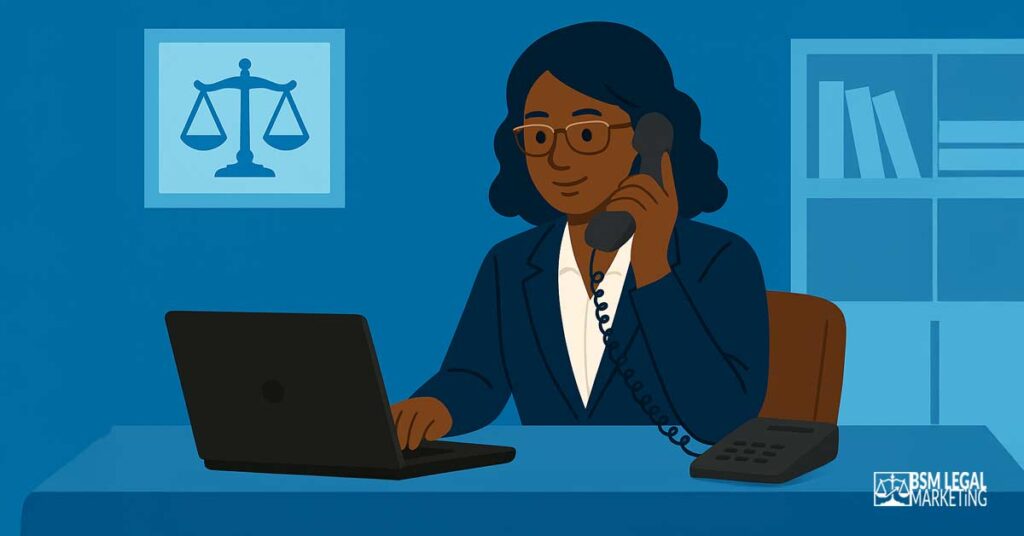
Choosing the Right Call Tracking Platform
The market offers dozens of call tracking platforms. Choosing the right one matters. [16]
| Feature | Why It Matters | What to Look For |
|---|---|---|
| Dynamic Number Insertion | Tracks specific keywords and sources | Unlimited tracking numbers, fast page load |
| Call Recording | Review conversations, train staff | Unlimited storage, easy playback |
| CRM Integration | Syncs with existing systems | Native integrations with Clio, Lawmatics, etc. |
| Reporting Dashboard | Understand performance quickly | Customisable reports, exportable data |
| Call Routing | Direct calls to right attorney | Time-based, location-based, IVR options |
| Mobile App | Monitor calls on the go | iOS and Android apps with full features |
Price varies significantly. Budget platforms start around £30 per month. Enterprise solutions can cost £500+ per month. [23]
Don’t choose based on price alone. A cheaper platform that doesn’t integrate with your CRM creates more work. A more expensive platform that saves your team five hours per week pays for itself. [16]
Most platforms offer free trials. Test at least three options. Pay attention to ease of use. If your team finds the interface confusing, they won’t use it consistently.
Technical Implementation Steps
Setting up call tracking involves several steps. Here’s the typical timeline:
| Implementation Step | Time Required | Who Does It | Complexity |
|---|---|---|---|
| Install tracking code on website | 1-2 hours | Developer or WordPress admin | Low |
| Configure number pool | 30 minutes | Marketing manager | Low |
| Set up call routing rules | 1-2 hours | Office manager | Medium |
| Configure CRM integration | 2-4 hours | Developer or tech support | Medium-High |
| Connect Google Analytics | 1 hour | Marketing manager | Low-Medium |
| Train team on system | 2-3 hours | Marketing/operations manager | Low |
| Test all functionality | 2-4 hours | Everyone | Low |
Total implementation time: 1-2 days of work spread over 1 week.
Step 1: Install Tracking Code
Add the platform’s JavaScript code to your website header. Most platforms provide simple instructions. If you use WordPress, install their plugin. For custom sites, your developer implements the code.
Test the installation immediately. Visit your website from different sources (Google search, social media, direct URL). Verify that different tracking numbers appear.
Step 2: Configure Number Pool
Most platforms require a “number pool” for dynamic tracking. This is a collection of tracking numbers the system rotates through. Size your pool based on concurrent website visitors. If you typically have 50 people on your site simultaneously, you need at least 50 tracking numbers.
Step 3: Set Up Call Routing
Decide where calls should go. Your main office line? Specific attorneys? An answering service after hours? Configure routing rules in your platform. You might route family law calls to one attorney and criminal defence calls to another. Set up time-based routing for evenings and weekends.
Step 4: Configure Integrations
Connect your call tracking to other SEO tools. Google Analytics integration is essential. This shows call data alongside website metrics. If you use a CRM, set up that integration next. Most platforms offer native connections to popular legal CRMs.
Step 5: Train Your Team
Your reception and intake staff need to understand the new system. Show them how to access call data. Explain how to use caller information to provide better service. Create simple documentation with screenshots.
Best Practices for Ongoing Success
1. Review Data Weekly
Don’t just install call tracking and forget about it. Review your data every week. Look for trends. Identify problems early. Create a simple weekly report tracking total calls, call sources, average call duration, and conversion rate.
2. Listen to Call Recordings
Call recording provides invaluable insights. Listen to at least 5-10 calls per week. You’ll hear how your team handles inquiries. You’ll understand what questions potential clients ask. Use recordings for training. When someone handles a call particularly well, use that as an example.
3. Track Conversion Rates
Not all calls are equal. Track which calls convert to actual clients. Tag calls in your system. Mark them as “consultation booked“, “not qualified“, “existing client“, etc. This lets you calculate true conversion rates for different marketing channels.
4. Use Call Data for SEO Strategy
Your call tracking data reveals which keywords actually matter. Create content around high-converting keywords. Build local landing pages for geographic terms that drive calls. Improve existing pages that rank well but don’t convert.
5. Monitor for Technical Issues
Call tracking technology occasionally has problems. Numbers might not display correctly. Calls might not forward properly. Set up alerts for technical issues. Get notified if call volume drops suddenly. Check regularly that tracking numbers display correctly on your site.
Advanced Call Tracking Topics and Emerging AI Technology

AI-Powered Call Analytics
Artificial intelligence is transforming call tracking. Modern AI SEO platforms don’t just record calls , they analyse them.
AI conversation intelligence can transcribe calls automatically, identify keywords and topics discussed, detect caller sentiment and emotion, score calls based on quality indicators, flag calls that need immediate follow-up, and track specific compliance requirements. [18]
This technology helps you understand patterns at scale. Instead of listening to every call, you can review AI-generated summaries. The system flags problematic calls automatically. Sentiment analysis is particularly valuable. The AI detects when a caller sounds frustrated, confused, or ready to hire.
AI Voice Agents and Automated Response Systems
AI voice agents can handle initial client interactions. These aren’t traditional IVR systems with button prompts. They’re conversational AI that responds naturally to spoken questions. [18]
An AI agent can answer common questions about your services, collect basic case information, schedule consultation appointments, route urgent matters to live attorneys, handle after-hours calls professionally, and qualify leads before transferring to staff.
This technology improves response times. When someone calls at midnight, they speak with an AI agent instead of reaching voicemail. The agent collects their information and schedules a callback. [21]
24/7 Legal AI Answering Services
Traditional answering services use human operators. They’re expensive and often lack legal knowledge. AI answering services provide an alternative.
These systems handle calls exactly like a trained receptionist would. They greet callers professionally. Ask relevant questions. Take detailed messages. Schedule appointments in your calendar. The AI learns your firm’s specific procedures.
Cost savings are significant. A human answering service might cost £500-1,000 per month. An AI service typically costs £100-300 per month. The AI never takes breaks, never calls in sick, and handles unlimited call volume. [18]
Integration with Marketing Automation
Advanced call tracking integrates with marketing automation platforms. This creates sophisticated nurture campaigns based on call behaviour.
For example, someone calls about a personal injury case but decides not to hire you immediately. The system automatically adds them to an email nurture sequence. They receive helpful information about injury claims over the next few weeks. [18]
If someone calls but reaches voicemail, automation triggers an immediate SMS. “Thanks for calling. We’ll return your call within one hour.” This simple message significantly improves conversion rates. [19]
Predictive Analytics and Lead Scoring
Machine learning models can predict which leads are most likely to convert. The system analyses thousands of calls, identifying patterns that correlate with successful client acquisition.
The AI might notice that calls lasting over five minutes convert at 60%, while calls under two minutes convert at 10%. Calls on Tuesday afternoons have higher conversion rates than Friday mornings. Callers who mention specific keywords are more valuable. [18]
This predictive scoring helps prioritise follow-ups. Your intake team focuses on high-scoring leads first. Lower-scoring leads might go to a nurture campaign instead. [21]
Stop Guessing, Start Growing: Your Next Steps with Call Tracking

Call tracking shows you exactly which keywords, content, and online marketing campaigns generate client consultations. You stop guessing about SEO effectiveness.
Installation is straightforward: add tracking code, configure call routing, collect data. Within weeks you’ll have insights that change your marketing budget allocation and help you grow your law firm.
The real value isn’t just attribution, it’s continuous improvement. You identify which landing pages convert best, which practice areas generate the highest-quality leads, and optimise your intake process based on actual call patterns.
Firms implementing call tracking make data-driven decisions and outperform competitors relying on intuition. If you’re serious about improving your local SEO KPIs and reporting, call tracking is essential.
Ready to See Which Marketing Actually Brings in Clients?
Your competitors are still guessing. You don’t have to.
At BSM Legal Marketing, we specialise in implementing call tracking systems that show law firms exactly where their best clients come from. We’ve helped businesses across the UK transform their marketing from expense into measurable investment.
We’ll help you:
- Set up call tracking integrated with your existing CRM and website
- Identify which SEO keywords actually generate consultation calls
- Stop wasting budget on marketing that doesn’t deliver clients
- Train your intake team using real call data and recordings
- Calculate true ROI from every marketing channel
Book a free 30-minute strategy call to discuss your law firm’s marketing goals. We’ll review your current setup and show you exactly what call tracking could reveal about your client acquisition.
Get your free marketing assessment today, no obligation, just actionable insights you can use immediately.
Frequently Asked Questions About Call Tracking for Law Firms

What is call tracking for law firms?
Call tracking for law firms is technology that shows you exactly where your phone calls come from. When someone searches Google, finds your website, and calls your office, the system records their entire journey. You see the keyword they searched, the page they visited, and how they interacted with your site before calling.
The technology uses unique phone numbers that forward to your main line. Each number contains data about the caller’s source, letting you attribute calls to specific marketing channels.
How much does call tracking software cost for attorneys?
Call tracking software for attorneys typically costs between £30 and £500 per month, depending on features and firm size.
Budget platforms (£30-100/month) offer basic tracking with limited numbers and features. Mid-range solutions (£100-300/month) include dynamic number insertion, call recording, and CRM integrations. Enterprise platforms (£300-500+/month) provide AI analytics, unlimited numbers, and advanced reporting.
Most platforms charge per tracking number. You’ll need at least 20-50 numbers for effective tracking, sometimes more for high-traffic sites. [11]
Does call tracking affect my law firm’s SEO?
Call tracking doesn’t negatively affect your SEO when implemented properly. The tracking numbers forward calls to your real number, so functionality remains unchanged for callers.
One concern is whether using different phone numbers on your website than in your Google Business Profile harms local SEO. The answer is no, as long as you’re consistent with your primary business number in your local SEO citations and directories.
Dynamic number insertion happens in JavaScript after the page loads, so Google sees your main number in the HTML. The tracking numbers are only visible to human visitors.
Can I record phone calls from potential clients?
Yes, you can record calls from potential clients, but you must comply with call recording laws. Some jurisdictions require two-party consent, meaning both you and the caller must agree to recording.
Most call tracking platforms include automatic notification. The system plays a message like “This call may be recorded for quality purposes” before the conversation begins. This satisfies legal requirements in most areas.
Be careful with attorney-client privilege. Once someone becomes your client, their call recordings may be privileged communications. Tag these appropriately in your system and restrict access.
Which call tracking software works best with legal CRMs?
The best call tracking software for legal CRMs depends on which CRM you use. Most major call tracking platforms integrate with popular legal CRMs like Clio, Lawmatics, PracticePanther, and MyCase. [23]
CallRail offers native integrations with many legal CRMs and is widely used by law firms. CallTrackingMetrics provides robust API connections for custom integrations. Nimbata works well with smaller practices using simpler CRM systems.
Before choosing a platform, verify that it integrates with your existing tools. Most vendors offer free trials, so you can test the integration before committing.
How do I track calls from Google My Business?
To track calls from your Google Business Profile (formerly Google My Business), use a static tracking number rather than dynamic insertion. Replace your main phone number in your Google Business Profile with a dedicated tracking number from your call tracking platform. This number forwards to your actual line but logs every call as coming from Google.
Important: Use this same tracking number consistently across your Google Business Profile. Don’t change it frequently, as number consistency affects your local reviews strategy and rankings.
You can also use separate tracking numbers for different locations if you have multiple offices. This lets you track each location’s Google Business Profile performance independently.
What’s the difference between static and dynamic call tracking numbers?
Static tracking numbers stay the same regardless of how someone visits your site. You assign one number to a specific marketing channel and leave it there. For example, you might use one static number on your Google Business Profile and a different static number in a Yellow Pages ad.
Dynamic number insertion (DNI) changes the phone number displayed based on how visitors arrive at your website. Someone from Google organic search sees one number. Someone from a Facebook ad sees another. The system swaps numbers automatically using JavaScript.
Dynamic tracking provides more granular data. You can track individual keywords and landing pages. Static tracking only shows broad channel performance. But dynamic tracking requires more technical setup and ongoing management.
How many tracking numbers do I need for my law firm website?
The number of tracking numbers you need depends on your website traffic. As a general rule, you need one tracking number for every concurrent visitor on your site. If your site typically has 30 people browsing simultaneously, you need at least 30 numbers in your pool.
Most call tracking platforms let you start with a smaller pool and expand as needed. Monitor your usage in the first few weeks. If you’re running out of numbers during peak times, increase your pool.
For static tracking, you only need one number per channel you want to track. If you’re tracking Google Business Profile, one print ad, and one radio spot, you need three static numbers.
Can call tracking show me which specific keywords generate calls?
Yes, call tracking can show you exactly which keywords generate phone calls. This is called keyword-level call tracking. When someone searches Google, clicks your website, and calls, the system captures the search query. You see the exact keywords they typed before finding you.
The data shows up in your call tracking dashboard. You can see that “car accident solicitor Birmingham” generated five calls this month while “personal injury lawyer” generated fifteen. This information is incredibly valuable for SEO strategy.
You can focus your efforts on keywords that actually drive calls, not just traffic.
How does call tracking integrate with Google Analytics?
Most call tracking platforms integrate directly with Google Analytics. The integration pushes call data into Google Analytics as events or conversions, letting you see phone calls alongside other website metrics. Setup typically involves connecting your Google Analytics account to your call tracking platform.
In Google Analytics, you can see which pages generated calls, track call conversion rates by traffic source, create segments of visitors who called vs. didn’t call, build custom reports combining calls with other metrics, and set up goals and funnels that include phone calls.
This integration gives you a complete picture of how phone calls fit into your overall marketing performance.
What happens if someone calls my tracking number directly instead of through my website?
When someone calls a tracking number directly (without visiting your website first), the call still goes through to your law firm. The tracking system simply can’t attribute it to a specific online source. These direct dial calls usually get tagged as “unknown source” or “direct call” in your reporting.
This can happen when someone saves your tracking number in their phone and calls later, sees your tracking number on a business card or printed material, or gets your number from another person. You’ll still get the call and can answer it normally. You just won’t have the full attribution data.
Can I use call tracking for multiple law firm locations?
Yes, call tracking works excellently for multi-location law firms. You can track each office separately while maintaining centralised reporting. Set up location-specific tracking in two ways:
Separate tracking numbers per location, your Manchester office uses one set of tracking numbers, your London office uses different numbers. Calls route to the appropriate office automatically. Geographic routing, the system detects where the caller is located and routes them to the nearest office.
Your reporting dashboard shows performance for each location. You can compare call volumes, conversion rates, and cost per call across all offices. This helps identify which locations need marketing support.
How quickly can I start seeing ROI from call tracking?
Most law firms see ROI from call tracking within the first month of implementation. The insights you gain immediately affect marketing decisions. In your first week, you’ll identify which marketing channels drive calls. Within a month, you can redirect budget from low-performing to high-performing channels, identify and fix problems in your intake process, focus SEO efforts on keywords that actually convert, and train staff based on call recording insights.
The longer you use call tracking, the more valuable it becomes. After six months, you’ll have enough data to identify seasonal patterns. After a year, you can accurately predict future call volumes and plan staffing accordingly.
Is call tracking worth it for small law firms?
Yes, call tracking is particularly valuable for small law firms. When you have limited marketing budget, you need to spend wisely. Call tracking shows exactly which marketing efforts work. Small firms often waste money on ineffective marketing because they lack data.
Call tracking prevents this waste. You see which channels actually generate clients. You can stop spending on what doesn’t work and invest more in what does. The technology is also affordable enough for small practices. Basic plans start around £30-50 per month. This typically pays for itself if it helps you acquire even one additional client per year.
Evidence & Metrics
| Insight | Metric / Tool | How to Use |
|---|---|---|
| GBP call history ended 31 Jul 2024 | Policy change (Google) | Replace GBP logs with third-party call tracking. Note the change in reports. |
| DNI attributes calls to SEO sessions | Call tracking + UTM parameters | Install DNI, enforce UTM standards, map calls to source/landing page. |
| Prove “contact intent” from SEO | GA4 tel: click event (GTM) | Fire an event on click-to-call and compare to completed calls to show connection rate. |
| Multi-office clarity | Separate number pools per location | Report calls, missed calls, answer rate, and instructions by office. |
| Evidence quality | Recordings/transcripts (lawful) | Use to verify qualified enquiries and improve intake scripts. |
Confidence & Verification
References
[1] The Role of Call Tracking in Law Firm SEO and Local Search Optimization
AccelerateNow, September 8, 2025
https://www.acceleratenow.com/the-role-of-call-tracking-in-law-firm-seo-and-local-search-optimization/
[2] Tracking Calls, Winning Cases: A Lawyer’s Guide
ENX2 Marketing, June 2, 2025
https://enx2marketing.com/call-tracking-for-lawyers/
[3] Call Tracking for Lawyers
CallTrackingMetrics, May 14, 2024
https://www.calltrackingmetrics.com/blog/marketing/attribution/call-tracking-for-lawyers/
[4] How Law Firms Can Use Long-Tail Keywords To Dominate Local SEO
Forward Lawyer Marketing, April 20, 2025
https://fwd-lawyermarketing.com/how-law-firms-can-use-long-tail-keywords-to-dominate-local-seo/
[5] Long Tail Keywords: The Key to Law Firm SEO Success
LawRank, September 30, 2025
https://lawrank.com/long-tail-keywords-the-key-to-law-firm-seo-success/
[6] Voice Search SEO: What Law Firms Need to Know Now
Forward Lawyer Marketing, October 14, 2025
https://fwd-lawyermarketing.com/voice-search-seo-what-law-firms-need-to-know-now/
[7] Semantic SEO for Law Firms: Smarter Content Strategy
Social Hive, May 24, 2025
https://www.socialhive.com.au/blog/2025/may/semantic-seo/
[8] Call Tracking for Lawyers: 5 Best Tools to Sign More Clients
Analytic Call Tracking, May 10, 2025
https://analyticcalltracking.com/blog/call-tracking-for-lawyers/
[9] Law Firm Call Tracking And Conversation Analytics With AI
Convirza, February 25, 2025
https://www.convirza.com/legal/
[10] A Guide to Call Tracking for Law Firms
Good 2B Social, March 10, 2024
https://good2bsocial.com/call-tracking-for-law-firms/
[11] Call Tracking for Law Firms: Is Your Phone Line Working for You?
Law Pro Nation, April 9, 2025
https://lawpronation.com/call-tracking-for-law-firms/
[12] SEO Call Tracking: The Unexpected Duo That Actually Works
Nimbata, July 6, 2025
https://www.nimbata.com/blog/seo-call-tracking
[13] Call Tracking for Law Firms. Everything You Must Know
Practice Proof, April 21, 2024
https://www.practiceproof.com/unleash-the-power-of-call-tracking-for-your-law-firm-a-comprehensive-guide/
[14] Truth SEO Call Tracking
LinkGraph, October 1, 2025
https://www.linkgraph.com/blog/truth-seo-call-tracking/
[15] How To Measure Your Law Firm SEO ROI
Everspark Interactive, May 27, 2024
https://www.eversparkinteractive.com/seo-for-lawyers/tracking-seo-results/
[16] 13 Best Call Tracking Software for Law Firms in 2025
Call Atlas, February 6, 2025
https://callatlas.io/blog/call-tracking-software-for-law-firms/
[17] Voice Search Optimization for Lawyers: Is Your Content Prepared?
Law Pro Nation, August 3, 2025
https://lawpronation.com/voice-search-optimization/
[18] How AI Voice Agents Transform Legal Client Communication
Dialora, August 20, 2025
https://www.dialora.ai/blog/ai-voice-agents-for-law-firms
[19] Legal AI Answering Service for Law Firms & Attorneys
CaseGen AI, May 31, 2025
https://www.casegen.ai/legal-law-firm-answering-service
[20] Hey Siri, Find Me an Attorney: Voice Search SEO for Law Firms
Lift Legal Marketing, May 27, 2025
https://liftlegalmarketing.com/voice-search-seo-for-law-firms/
[21] AI Answering Service for Law Firms: 24/7 Legal Client Intake
Whippy AI, October 22, 2025
https://www.whippy.ai/blog/ai-answering-service-for-law-firms
[22] Voice Search For Law Firms: 2025 Optimisation Guide
BSM Legal Marketing, October 24, 2025
https://bsmlegalmarketing.com/marketing-for-law-firms/local-seo-for-lawyers/voice-search/
[23] Best Call Tracking Software for Lawyers
LawRank, December 3, 2024
https://lawrank.com/best-call-tracking-software-for-lawyers/
[24] The Ultimate Call Tracking Terms Glossary
Nimbata, October 15, 2025
https://www.nimbata.com/blog/call-tracking-terms-glossary
[25] Why Call Tracking And Heatmaps Are Essential For Law Firm Marketing in 2025
Forward Lawyer Marketing, May 12, 2025
https://fwd-lawyermarketing.com/why-call-tracking-and-heatmaps-are-essential-for-law-firm-marketing-in-2025/
[26] Data Protection Act, GDPR, FCA Consumer Duty, and Call Recording Laws in the UK,
Call Centre Helper
https://www.callcentrehelper.com/data-protection-act-and-call-recording-57146.htm
[27] Call recording laws
Hubspot, July 25, 2025
https://knowledge.hubspot.com/calling/what-are-the-call-recording-laws
[28] Confidentiality of client information
Solicitors Regulation Authority (SRA), 30 June 2022
https://www.sra.org.uk/solicitors/guidance/confidentiality-client-information/
[29] Marketing your services to members of the public
Solicitors Regulation Authority (SRA), 19 December 2024
https://www.sra.org.uk/solicitors/guidance/marketing-public/
Previous Article
Local SEO Tools for Lawyers: The Complete Implementation Guide
Next Article
Local SEO Checklist for Law Firms: Complete Task List for Search Dominance